

Caregiver Burnout: Symptoms, Signs and How to Recover
Caregiver burnout symptoms and signs to watch for, the guilt and resentment no one talks about, compassion fatigue vs burnout, and how to recover.
You're not bored of your life. You're too depleted to feel it.
Get up, go to work, deal with everyone's problems, come home wrecked, sleep, repeat. The weekend finally comes and you sleep through it, then wake up feeling awful because another day is gone. You're the one everyone leans on, you're always "fine," and you can't remember the last time you looked forward to anything.
Emotional burnout is exhaustion that comes from giving emotionally for too long without getting enough back.
Take the 9 sign self-check quiz ↓

It can come from a relationship, family, friendships, work, or years of keeping everyone else okay.
Emotional burnout is a state of deep emotional depletion. You still function, but your ability to feel, care and respond has run dry.
It sits at the heart of how psychologists understand burnout. In 1981, psychologists Christina Maslach and Susan Jackson described burnout as having three parts:
Emotional exhaustion is the core of it. It means your emotional resources are used up and your whole emotional world feels muted.
It isn't a formal diagnosis, and it's different from being physically tired. You can sleep for twelve hours and wake up just as empty, because the thing that's depleted is your capacity to hold feelings, other people's and your own.
It's also different from mental burnout, which shows up as brain fog, forgetfulness and trouble concentrating. Most people have some of both.
Tick the ones that sound like you. Be honest, nobody else can see this.
Burnout usually builds quietly, one sign at a time. Noticing it early makes it far easier to turn around.
A few of these at once usually means more is going out than coming back in, and rest alone isn't closing the gap.
That's a lot to be carrying. You're not lazy and you're not imagining it. Something has been draining you for a long time.
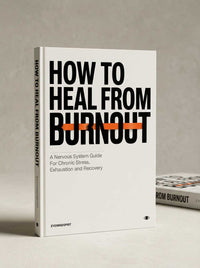
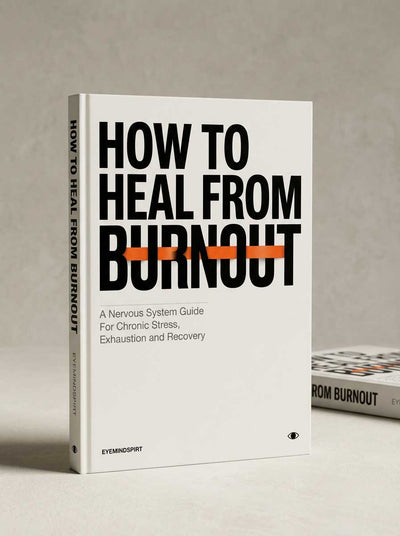
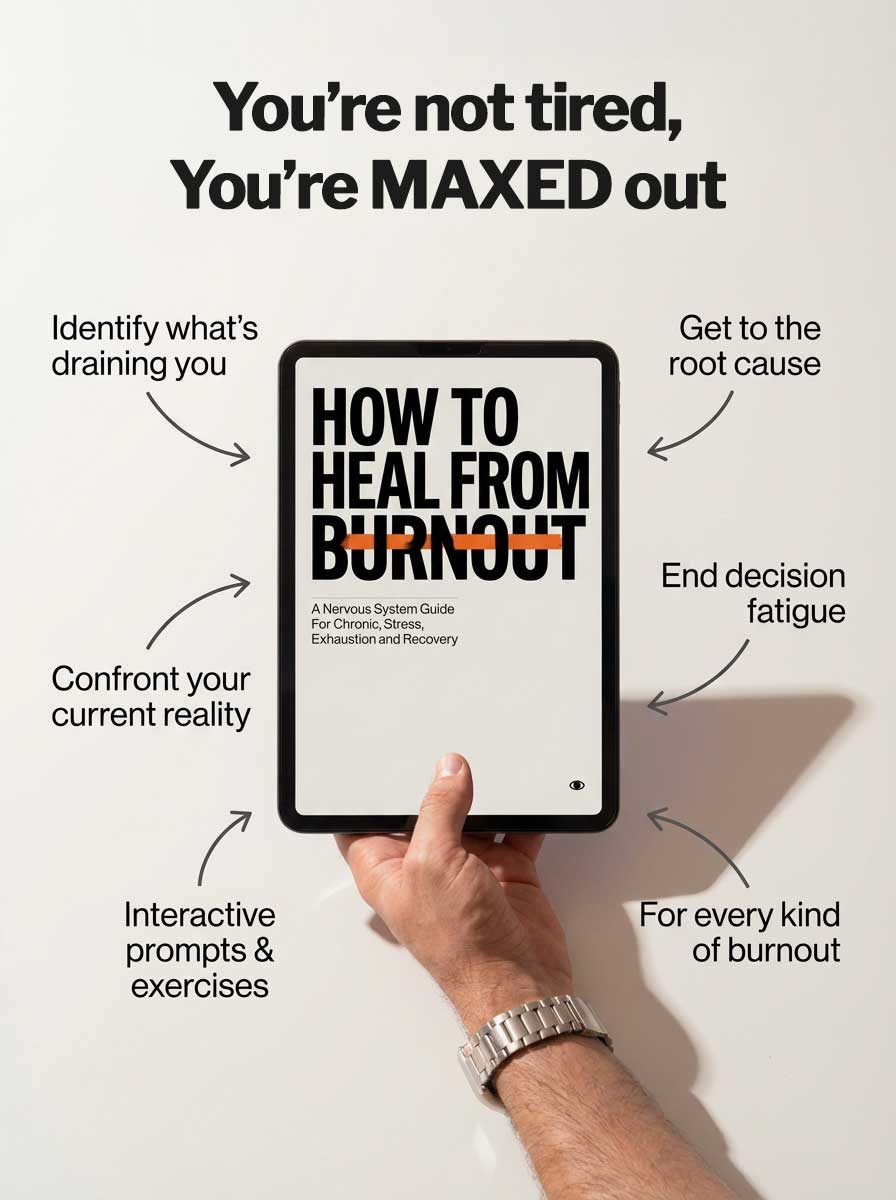
How to Heal From Burnout is a guided journal that helps you find what's draining you, understand the pattern underneath it and start rebuilding, at your own pace.
This isn't a diagnosis. If you've felt hopeless for a while, please talk to a doctor or therapist.
Digital or paperback. Or take the free 3 minute burnout quiz first.
This is one of the most common questions people ask about burnout, and it's full of shame. From the outside, your life doesn't look that busy. So why are you this tired?
Because a lot of what's draining you is invisible.
These bars are illustrative, not measurements. The point is simple. You can be physically still and emotionally exhausted.
So you're not lazy, and you're not imagining it. The work you're doing is emotional, and nobody can see it, including you.
It's also worth ruling out physical causes. Ask your doctor to check iron including ferritin, B12, vitamin D and your thyroid.

How to Heal From Burnout is a guided journal designed to help you identify what is draining your energy, understand the patterns underneath it and start rebuilding your capacity.
See The Burnout Journal →For a lot of people, emotional burnout comes from hiding what they feel so they can keep everyone else okay. They're always "on," keeping the peace, matching everyone's mood so nothing gets tense.
Hiding your feelings makes them heavier. Hiding how you feel doesn't make the feeling go away. You just carry it alone.
Your body pays for it. You may look calm on the outside while your nervous system works harder underneath.
It pushes people away. Nobody can help with something they can't see.
Faking feelings drains you. Smiling through a terrible week so nobody worries can take more out of you than people realize.
You keep the peace even when it costs you.
Everyone comes to you. You rarely get a turn.
Your body can stop while your mind keeps working.
Your energy goes into keeping everyone else okay.
Emotional burnout often hits hardest in a relationship where one person does most of the soothing, explaining and smoothing over.
This isn't automatically a sign the relationship is over. It can mean the emotional load has been uneven for a long time, or you're both stretched thin and the relationship is where it all lands.
They overlap a lot, and one can turn into the other. If everything feels like a task, even the things that would usually bring you joy, depression may be part of what you're experiencing.
Emotional burnout often improves when the load gets lighter. Depression can remain even when it does.
If you've felt hopeless for a while, or you're sleeping whole days away and nothing helps, please talk to a doctor or therapist.
Open the ones that feel useful right now.
Don't try to get back to your old self in a week. Pick one small thing a day and let that be enough.
At the end of each day, write down what you actually did, even if it's "I got out of bed and washed my face."
Say no to something this week. You don't have to be available for everything.
Pick a time each evening when you stop answering messages, stop problem solving for other people and stop replaying the day.
Tell one safe person how you're actually doing. Being seen can make you feel less alone with it.
Put words to it. "I feel resentful." "I feel invisible." "I feel numb."
Sometimes the problem is the job, the relationship or the role. You can't journal your way out of a situation that keeps hurting you.
Verified Burnout Journal customer
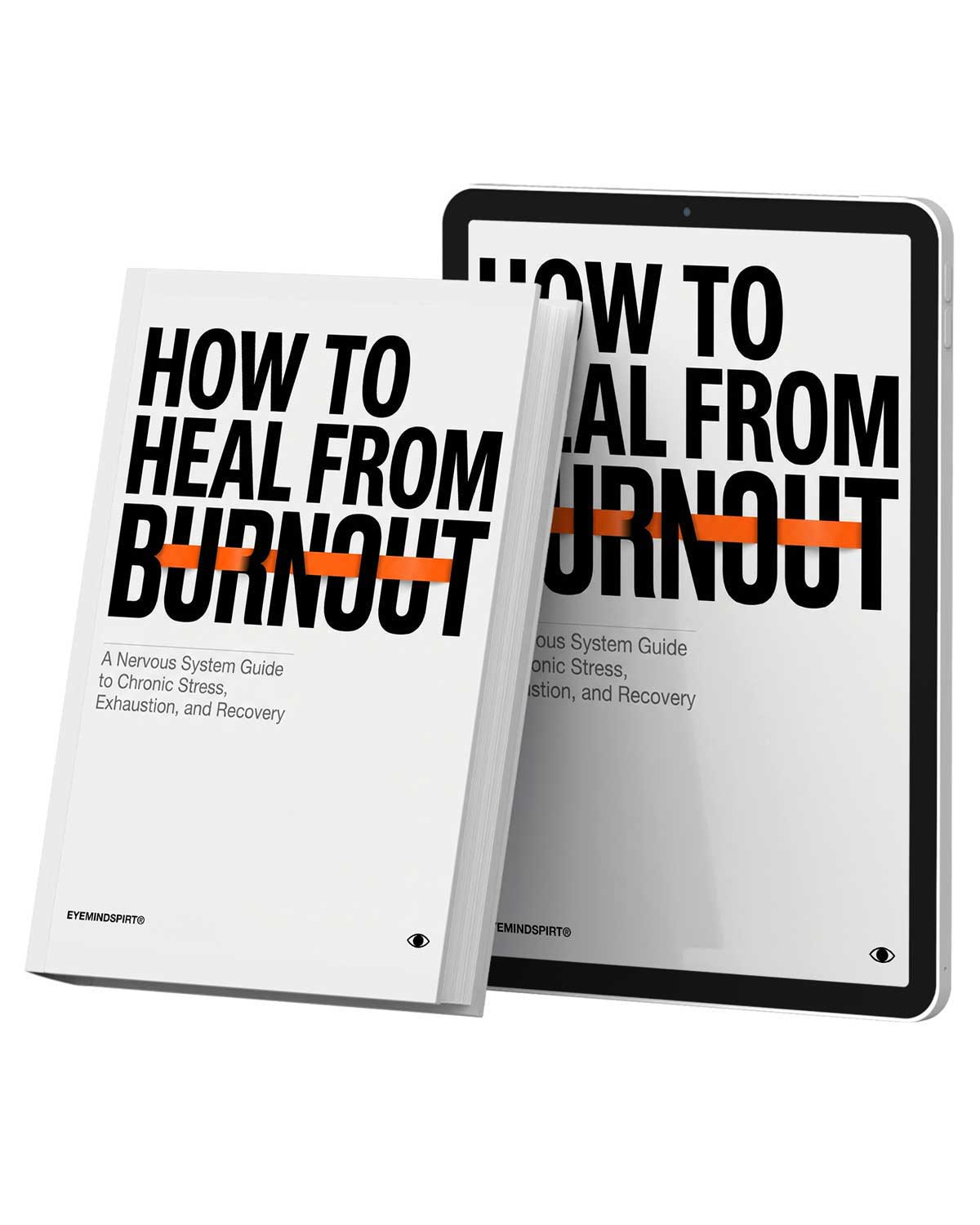
A guided journal for understanding why you're exhausted, what's actually draining you and how to start rebuilding without simply forcing yourself to push harder.
Emotional burnout is a state of emotional depletion from giving emotionally for a long time without enough support or recovery. It can show up as numbness, irritability, pulling away and feeling empty even after rest.
Emotional exhaustion can come from invisible effort such as overthinking, not switching off, staying on high alert, hiding your feelings and absorbing other people's stress.
It depends on how long it's been building and whether the situation changes. Recovery usually comes through small changes over time rather than one dramatic reset.
There can be a lot of overlap. If everything feels like a task, even things that usually bring you joy, speak with a doctor or therapist who can help you work out what you're experiencing.
You're allowed to put some of that energy back into yourself.
Start The Burnout Journal →Vanessa x

How To Heal From Burnout
$44.00$22.00